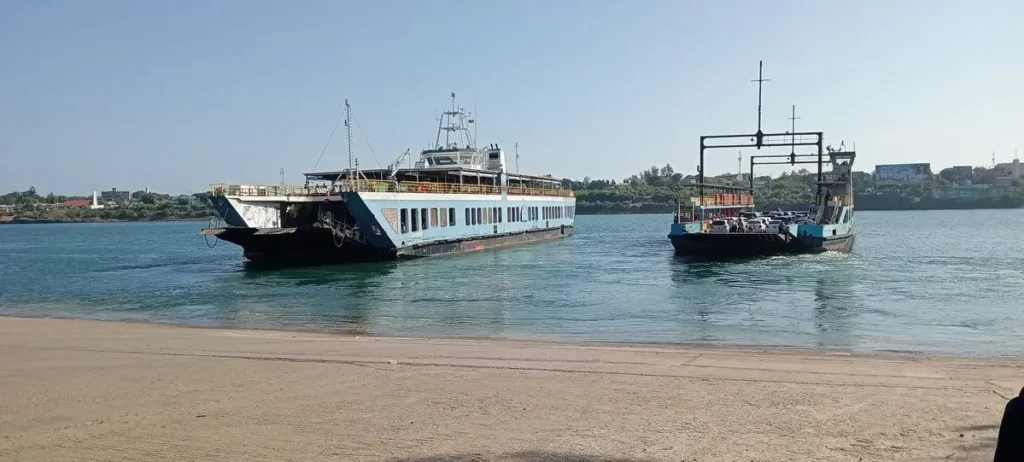
The Likoni Ferry is a vital transport link connecting Mombasa Island to the South Coast, specifically Likoni and Kwale County. The Likoni Ferry spans approximately a distance of 500 meters (about 0.5 km) and is 57 to 60 meters (about 187-197 feet) deep. The Likoni Ferry is operated by the Kenya Ports Authority (KPA), a state-owned agency responsible for managing and running ferry crossings in Kenya—including the busy Likoni Channel. Every day, thousands of pedestrians, motorbikes, private vehicles, public transport buses, and heavy trucks depend on the ferry to cross the Likoni Channel, making it one of the busiest ferry crossings in East Africa.
To improve efficiency and reduce congestion, Likoni Ferry operates a cashless payment system using M-Pesa, allowing vehicles to pay via USSD (*721#) or PayBill (4023233) before boarding.
How to Pay for the Likoni Ferry via M-Pesa in 2026: Updated Vehicle Toll Fees & Smart Gate Guide
If you are specifically looking for updated Likoni Ferry charges, we have a full breakdown in our guide on Likoni Ferry charges and vehicle categories, covering everything from private cars to heavy trucks and abnormal loads.
For commuters concerned about delays and peak-hour congestion, see our detailed guide on the Likoni Ferry schedule, waiting time, and peak hours, where we explain the best times to cross and what to expect during busy periods. For drivers who prefer to avoid the ferry altogether—especially heavy trucks, fuel tankers, or time-sensitive cargo—the Dongo Kundu Bypass provides a reliable road alternative linking Mombasa Island to the South Coast.
Where Is Likoni Ferry Located
The Likoni Ferry is located at the southern end of Mombasa Island, crossing the Likoni Channel to connect the island with the South Coast of Kenya, specifically Likoni in Kwale County and the neighboring country Tanzania
See in the the Map
Areas Connected by Likoni Ferry
The ferry links two key sides of the channel:
- North side: Mombasa Island, close to the Central Business District (CBD) and the Port of Mombasa
- South side: Likoni area, providing direct access to Kwale County, including Ukunda, Diani, Tiwi, and the wider South Coast region
Because of this short water crossing, the Likoni Ferry remains the fastest and most direct route between Mombasa Island and the South Coast, especially for daily commuters, public transport vehicles, and commercial traffic.
Strategic Importance of Likoni Ferry
Likoni Ferry plays a critical role in coastal transport because it
- Serves as the main gateway to the South Coast
- Supports the movement of people, goods, and fuel
- Connects Mombasa’s CBD and port to coastal towns and major tourist destinations
- Significantly reduces travel distance and time compared to road-only routes
Alternative Route: Dongo Kundu Bypass and Liwatoni (Floating) Bridge
For drivers who prefer to avoid the ferry—particularly during peak hours or when transporting heavy, fuel, or abnormal loads—the Dongo Kundu Bypass provides a reliable road-based alternative linking Mombasa Island to the South Coast without crossing the channel.
The Liwatoni Bridge, which was intended to serve as a floating pedestrian bridge, is currently non-functional for public use. As of now, it is not operational, and pedestrians are unable to use it as an alternative crossing. The exact reasons for its non-functionality have not been officially communicated, leaving the bridge inactive despite its potential to ease pedestrian congestion at nearby Likoni ferry crossings.
While the ferry offers the shortest route, the bypass provides a longer but more predictable journey, which we compare in detail in our Dongo Kundu Bypass vs. Likoni Ferry guide.
Where is the Likoni Ferry located? Exact Map, Directions, and Areas Connected (2026 Guide)
Ferries Operating at Likoni Channel
The Kenya Ferry Services operates a fleet of ferries at the Likoni Channel to ensure smooth, safe, and continuous movement between Mombasa Island and the South Coast. To handle heavy daily traffic and reduce delays, four ferries are actively deployed on the Likoni crossing.
Ferries Currently in Operation
- MV Jambo—One of the primary ferries handling both vehicles and pedestrians during peak hours
- MV Likoni—A core vessel designed for high-capacity vehicle movement
- MV Kwale—Supports traffic flow during congestion and peak travel periods
- MV Safari—Often used to complement other ferries and maintain service continuity
Each ferry has different capacity and operational roles. Check out official Kenya ferry services to learn more.
Likoni Ferry Charges
Motorbikes, Carts & Bicycles
| Vehicle Category | Charge (KES) |
| Empty motorbike/cart | 50 |
| Loaded motorbike/cart | 100 |
| Loaded bicycle | 60 |
Private Cars & SUVs
| Vehicle Category | Charge (KES) |
| Empty car | 120 |
| Loaded car | 180 |
| Empty 4×4 / SUV | 150 |
| Loaded 4×4 / SUV | 210 |
| 4×4 with trailer | 300 |
Pick-ups, Vans & Public Transport
| Vehicle Category | Charge (KES) |
| Empty pickup/van | 280 |
| Bus | 1100 |
| 4×4 with trailer | 300 |
Fuel Vehicles, Trailers & Abnormal Loads
| Vehicle Category | Charge (KES) |
| Empty trailer | 7000 |
| Empty fuel car | 2115 |
| Empty fuel trailer | 5550 |
| Loaded fuel trailer | 7950 |
| Loaded fuel tanker (lorry) | 2900 |
| Abnormal load | 15959 |
Trucks (Length-Based Charges)
| Vehicle Category | Empty (KES) | Loaded (KES) |
| 5.5 metres | 350 | 570 |
| 6 meters | 400 | 620 |
| 7.5 metres | 600 | 820 |
| 9.5 metres | 850 | 1350 |
| 11 metres | 1050 | 2500 |
Charges vary depending on vehicle type, length, and whether it is loaded or empty. For a complete, up-to-date breakdown including trucks, fuel tankers, and abnormal loads, see Likoni Ferry charges and vehicle categories explained.
How to pay using M-Pesa.
How to Pay for Likoni Ferry
USSD *721#
PayBill: 4023233
For step-by-step instructions on how to pay using M-Pesa PayBill or USSD, common payment mistakes, and FAQs, read our full guide on how to pay for the Likoni Ferry via M-Pesa PayBill and USSD.
Here is how to pay for the Likoni Ferry using M-Pesa PayBill and USSD.
Likoni Ferry Schedule & Waiting Time and Timetable
The Likoni Ferry operates 24 hours a day, providing a continuous crossing between Mombasa Island and Likoni in Kwale County. Rather than following a fixed clock-based timetable, ferries run in constant rotation, with frequency adjusted according to traffic demand and time of day.
Waiting times vary significantly. Peak congestion is typically experienced between 6:00 AM and 9:30 AM and 4:00 PM and 9:00 PM, when commuter and vehicle volumes are highest. During these periods—especially on weekends, public holidays, and school travel seasons such as April, August, and December—queues can extend for long periods.
During off-peak hours, particularly late night and midday, crossings are generally faster and more predictable. To manage congestion, multiple ferries operate simultaneously, and additional vessels may be deployed during high-traffic periods, while maintenance is often scheduled overnight to minimize disruption.
For commuters and drivers, understanding these patterns helps with better trip planning, reduced waiting time, and smoother crossings. Those seeking to avoid peak-hour delays—especially heavy commercial vehicles—may also consider the Dongo Kundu Bypass as an alternative route.
Likoni Ferry Schedule & Waiting Time: Peak Hours, Timetable & Best Time to Cross
Alternative to Likoni Ferry
The Dongo Kundu Bypass (officially the Mombasa Southern Bypass) has emerged as the primary alternative to the Likoni Ferry, specifically designed to address the perennial congestion and safety concerns associated with the ferry crossing.
This bypass is particularly beneficial for those traveling between Diani and Moi International Airport or the Mombasa SGR terminals. For heavy trucks, fuel tankers, and time-sensitive cargo, the bypass may be more reliable. See our full comparison in Dongo Kundu Bypass vs. Likoni Ferry: Which is better?
Is There an Alternative to the Likoni Ferry?
Is the Likoni Ferry Safe?
Yes. Likoni Ferry is generally safe and is used daily by thousands of pedestrians and vehicles without incident. It is operated by Kenya Ferry Services under established safety procedures. However, like any busy transport crossing, congestion during peak hours can create discomfort, so travelers are advised to follow instructions from ferry officials and avoid rush hours when possible.
FAQs
Does Likoni Ferry operate at night?
Yes. Likoni Ferry operates 24 hours a day, including at night. However, waiting times may increase during peak hours, weekends, public holidays, or when traffic volume is high.
How much does it cost to use the Likoni Ferry?
Likoni Ferry charges depend on vehicle type and vehicle length (for trucks). Whether the vehicle is loaded or empty. Motorbikes and private cars are highly subsidized, while trucks, fuel tankers, and abnormal loads attract higher charges.
How do you pay for Likoni Ferry?
All payments are cashless and made via M-Pesa using either USSD: *721# (guided payment process) or PayBill: 4023233, where the vehicle number plate is used as the account number. Once payment is confirmed, the boarding barrier opens automatically.
What is the alternative to using the Likoni Ferry?
The main alternative route is the Dongo Kundu Bypass, a road-based option connecting Mombasa Island to the South Coast without crossing the channel.
Is Likoni Ferry safe?
Yes. Likoni Ferry follows strict safety and operational procedures managed by Kenya Ferry Services. Multiple ferries, automated payment systems, and controlled boarding help reduce overcrowding and improve safety.
What are the peak hours at Likoni Ferry?
Peak congestion usually occurs:
Morning: 6:00 AM – 9:00 AM
Evening: 4:30 PM – 8:00 PM
Weekends and holidays