 Skip to content
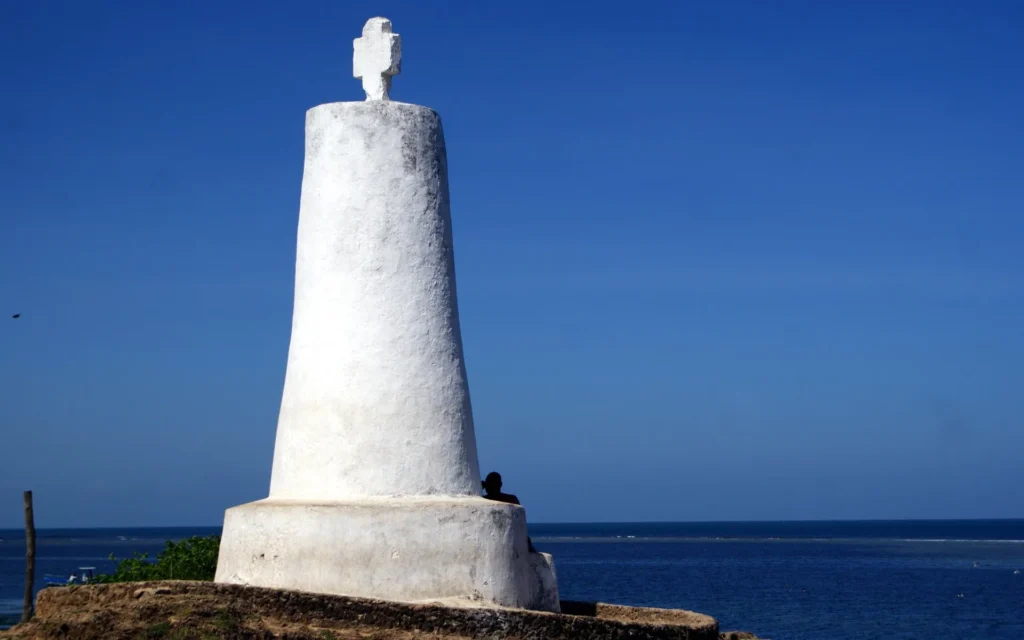
The Vasco da Gama Pillar, a rare surviving Padrão from the late 1400s, serves as a centerpiece of the National Museums of Kenya heritage circuit. The structure serves as a bridge between African and European history, marking the spot where the Sultan of Malindi welcomed the Portuguese fleet. It is a must-visit site for anyone exploring the rich cultural heritage of the Kenyan coast.
The Definitive History of the Vasco da Gama Pillar
The Vasco da Gama Pillar history is a journey into the origins of global trade. Standing as a sentinel on a coral cliff in Malindi, it is the only original Portuguese Padrão remaining in its 15th-century settlement location along the East African coast.
1. The Origins: A Symbol of Diplomacy
In the late 15th century, Portuguese explorer Vasco da Gama reached Malindi. Unlike his encounters in Mozambique, he was warmly received by the Sultan of Malindi. The pillar was erected as a symbol of diplomacy and a navigational aid. It also served as a gesture of thanks for the Sultan's help in providing the pilot Ahmad Ibn Majid, who helped the fleet reach India.
2. The "Padrão" Cross & Construction
The structure features a white, bell-shaped column. At its summit is the Padrão—a limestone cross bearing the Portuguese Coat of Arms. Carved in Lisbon, this cross traveled thousands of miles on Da Gama’s ship. In 1873, the column was reinforced by Captain George Malcolm to protect it from the elements, and in recent years, a seawall was added to prevent erosion from the Indian Ocean.